Posts
Vladimir Propp’s Character Theory
- Get link
- X
- Other Apps
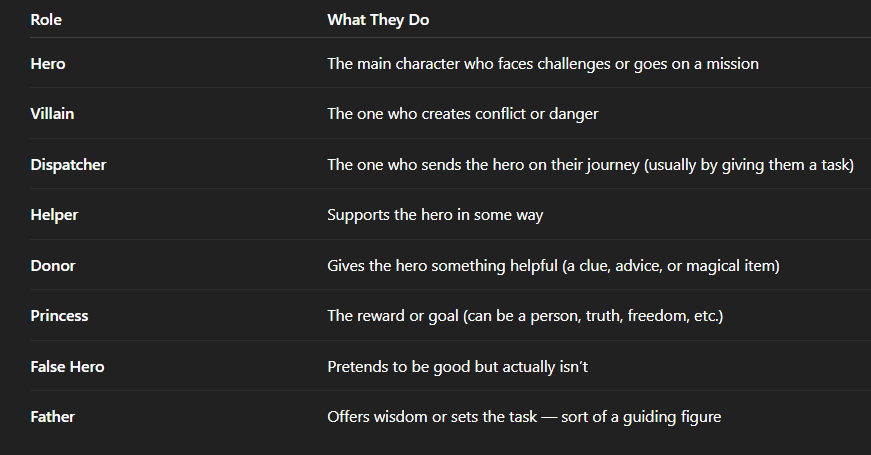
Propp’s Character Theory Vladimir Propp studied classic folk tales and noticed that no matter what the story was about, the characters often played similar roles. It wasn’t about who they were as individuals but what part they played in the story —like whether they caused problems, helped the hero, or were the hero themselves. He identified 8 common roles that tend to show up in most stories: How We Used It When we first wrote the film opening, we didn’t sit down with Propp’s theory in mind—we just focused on what felt natural for the story. But after learning about his character roles, we realized… we actually followed his structure without meaning to! Here’s how our characters match his theory: Jay is clearly the hero— he gets the dare and enters the creepy room. Sabari , the friend who dares him, acts as the dispatcher— starting the chain of events. But later in scene 3, that same friend reappears in a mysterious, eerie way—which makes him feel more like a false hero or maybe ...
Todorov’s Narrative Theory
- Get link
- X
- Other Apps
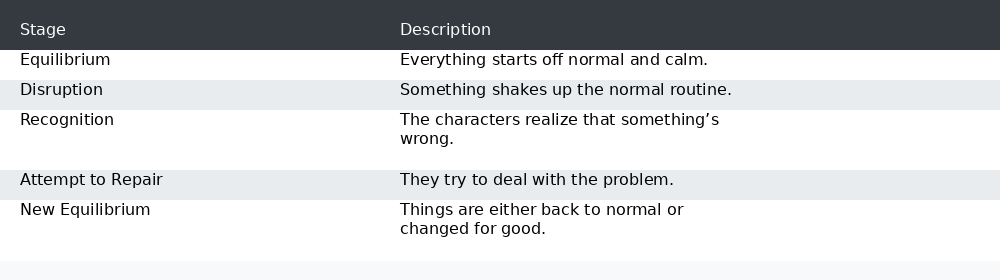
Todorov’s Narrative Theory Tzvetan Todorov believed that most stories follow a simple structure made up of five stages. This sequence helps create a full, satisfying narrative arc—from normal life to conflict and finally to some kind of resolution. Here’s a breakdown of the five steps: How We Used It Since we only created a short film opening, we couldn’t show the full five stages—but we still used the first three to build tension and curiosity. And About the Voiceover… The voiceover in our film shares Ethan’s story from the past. It sets a dark, mysterious tone and provides some backstory—but it doesn’t represent the “normal life” part of Jay’s story, so it doesn’t count as the equilibrium.
Roland Barthes' Theory
- Get link
- X
- Other Apps
Reading Between the Frames: Roland Barthes’ Theory in The Whispering Nightmare Roland Barthes believed that media texts don’t have just one fixed meaning. Instead, each audience member interprets what they see in different ways, depending on their culture , experiences , and point of view . In other words, what one person sees as just an object or moment could feel completely different to someone else. Barthes introduced two key ideas: According to Barthes, signs like setting, sound, facial expression, or even lighting can suggest hidden emotions or themes. These interpretations shift from person to person, making every viewer’s experience a little different. How We Used Barthes’ Theory in The Whispering Nightmare We kept this theory in mind when creating our scenes. Here’s how some simple visuals and sounds in our film opening carried deeper meaning:
Stuart Hall’s Reception Theory
- Get link
- X
- Other Apps
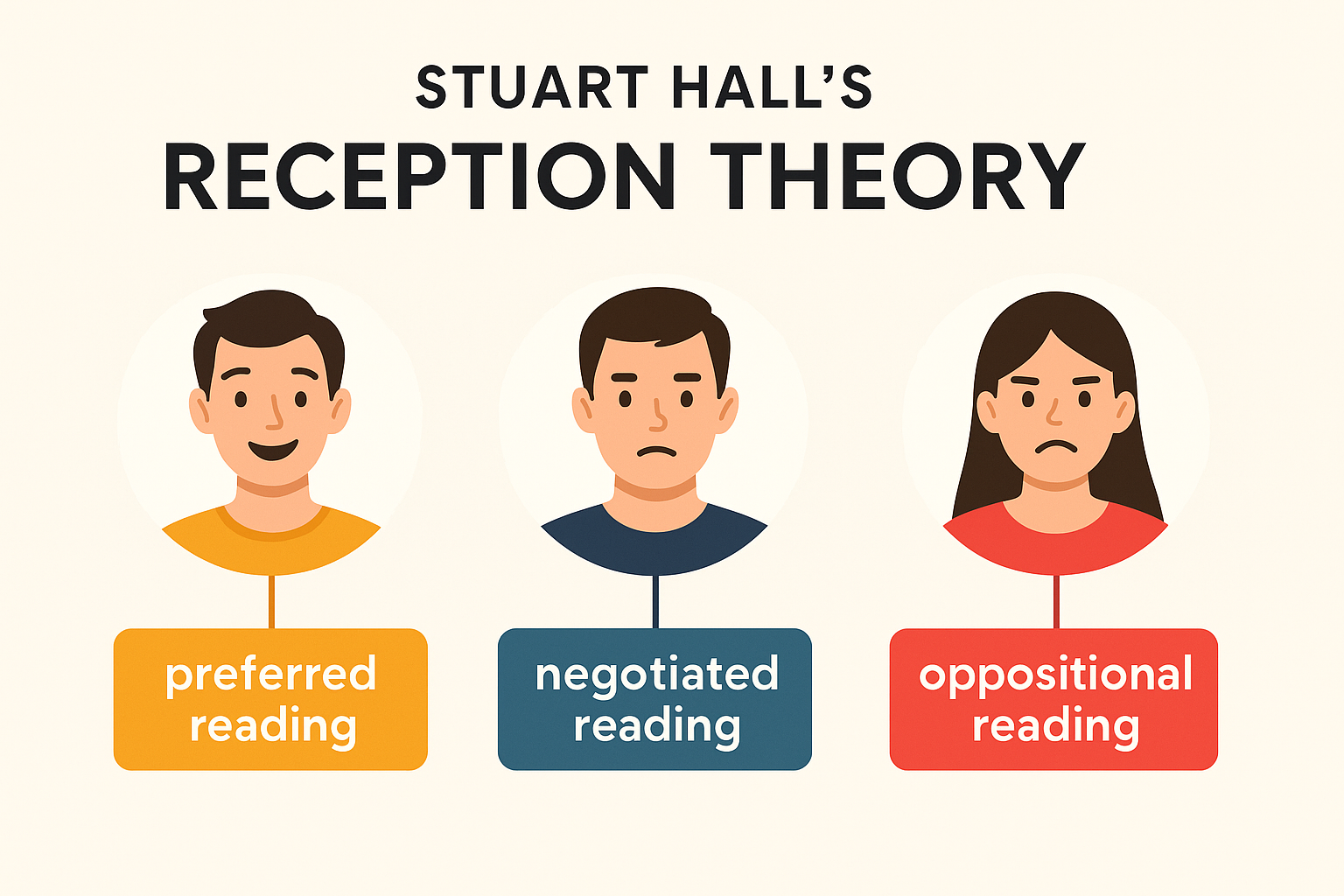
Hall’s Reception Theory Stuart Hall’s reception theory is all about how people understand media in their own unique way. He believed that the meaning of a film or show isn’t just decided by the creators—it also depends on how the audience interprets it, based on their own life experiences, beliefs, and background. Hall identified three main types of audience reactions: How We Used It When we showed our opening scene to a small group of viewers, their reactions were surprisingly varied. Everyone watched the same clip, but their interpretations didn’t always match ours: A few people had a preferred reading . They totally got the vibe we were going for—how peer pressure and fear of the unknown were central themes. They understood that the haunted room wasn’t just creepy but symbolized deeper emotional tension. Others gave us a negotiated reading . They liked the concept but didn’t take the ghost literally. Some thought it represented Jay’s own mental state, like anxiety or imaginatio...
Steve Neale’s Genre Theory
- Get link
- X
- Other Apps
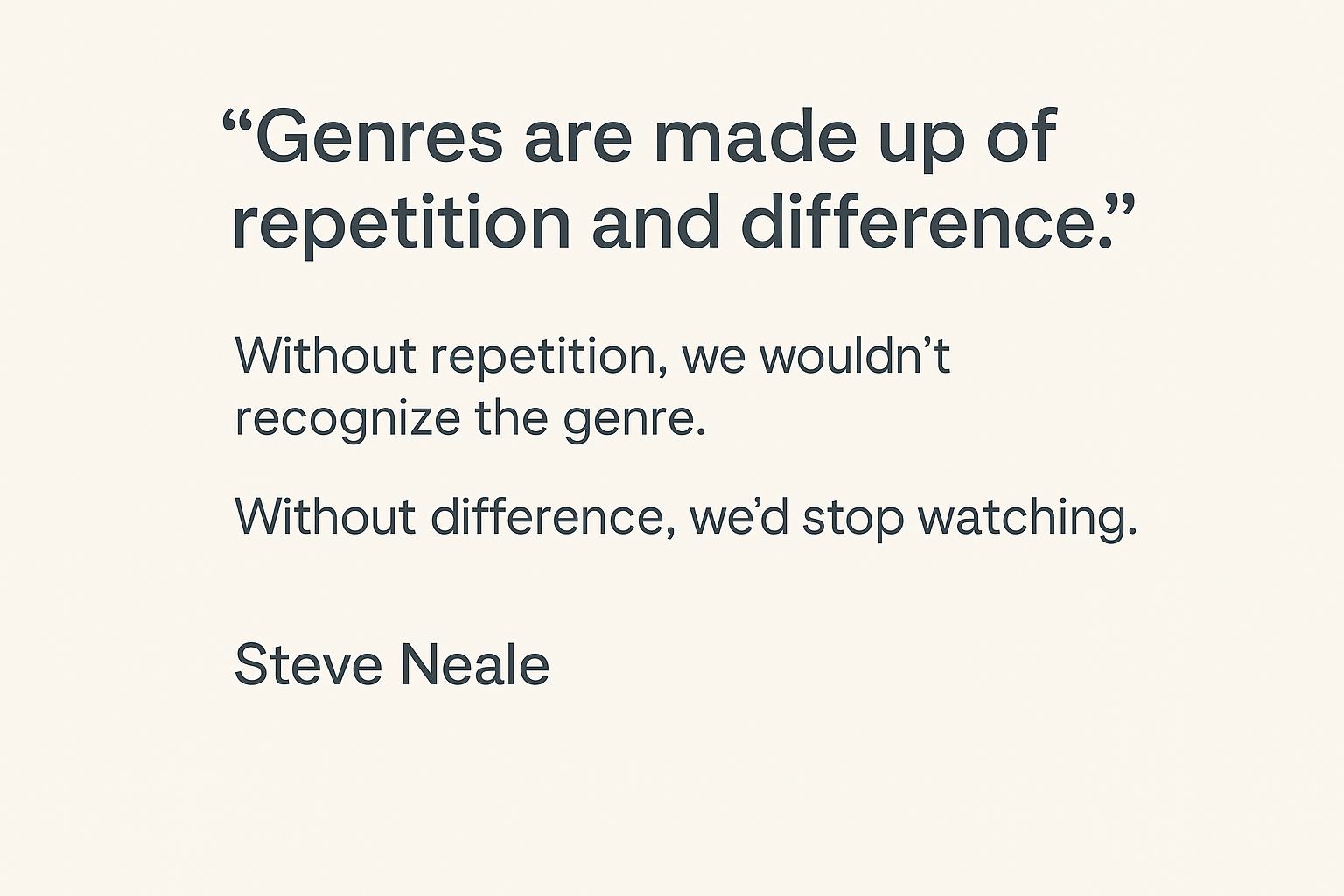
Genre with Steve Neale’s Theory— The Whispering Nightmare By combining comedy and horror themes, we wanted to establish a unique mood in the opening of our film, The Whispering Nightmare. Even though the story is only getting started, we wanted to let the viewers know right away what genre it is so they can be entertained We used Steve Neale's genre theory, which argues that while genres depend on recurring elements that viewers are accustomed to, they also need change to keep viewers interested. To put it another way, originality is essential to maintaining the experience's novelty value, even though certain conventions should be followed. Things We Recited (Well-Known Horror-Comedy Tropes) An eerie backstory and a ghostly location (Ethan Graves) Teens playing Truth or Dare together, which turns into a scary game Usually found in horror-comedy openings, humorous dialogue and light-hearted situations An eerie, silent conclusion that suddenly fades to black is a common horror cl...
Binary Opposition Theory
- Get link
- X
- Other Apps
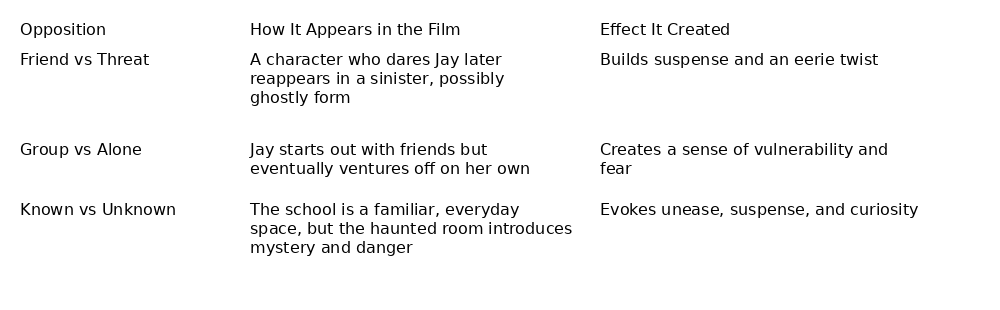
Understanding Binary Opposition Theory Claude Lévi-Strauss came up with the idea that stories often revolve around clear-cut opposites—called binary oppositions . These contrasting elements help drive the plot and deepen emotional impact. In horror especially, these oppositions can amplify tension and engage the audience more powerfully. Some common binary opposites you’ll find in stories include: Light vs Dark Good vs Evil Safe vs Dangerous These contrasts don’t just show what’s happening—they make you feel it. The shift between opposites is what keeps the story gripping, particularly in horror films. How We Applied It in The Whispering Nightmare Right from the beginning stages of our planning, we used opposing ideas to build the structure of our story and create suspense. Here are a few key examples:
From Script to Screen: A Story Beyond the Frame
- Get link
- X
- Other Apps
This is merely a synopsis of the entire procedure, excluding a few details. Let's move on to February and begin by selecting the genre we intend to work with, be it horror or just a short film that raises public awareness. Later on, we needed a subject to depict, or more accurately, a stereotype that we could utilize to create the movie, like peer pressure. Since some friends can be both positive and negative in specific ways, things can turn out badly, and nobody could have anticipated it. The script's construction process came next, where we talked about the specifics of the insert shots, the setting we would use, and the approximate number of actors we would need to find a space that would work for everyone. We attended the course for two Saturdays after the school individually organized a trip to a college that provided the direction and information we required. I genuinely liked it, and it was very helpful in removing some of my uncertainties and providing me with a better...
Dubbing
- Get link
- X
- Other Apps
In my opinion, dubbing has been recognized as a really lucky experience for anime fans such as me, which is why this is my personal favorite blog to write. Additionally, it was nerve-racking to perform in front of others, and the room was eerily quiet save for my raspy voice, which was recorded at a very low volume and hardly made any range. I was blown away! Should I be yelling at the top of my lungs just to get a standard queue? Even though I'm still not happy with the work I did, I had to give it up for a while and cope with it. Additionally, since dubbing was always the goal, we instructed the actors to do so. Since some of my friends have lower voices than mine, I was worried about how they would react if I couldn't perform properly. We all made a lot of takes and ended when the teachers and actors were satisfied.
First Cut
- Get link
- X
- Other Apps
Lastly, the blog serves as the actual main point of the most recent ones. I had to make sure there was no wasted space or mismatched audio for a clean cut because I was experiencing problems overlaying audio clips and creating sound motifs when I first started editing. Subsequently, I discovered that the main character's placement is so blatantly incorrect when he opens the door and in the following shot that we were forced to reshoot it. Since I basically have nothing more to say than what I've said in practically every blog, this one is shorter than my usual ones.
Script Breakdown
- Get link
- X
- Other Apps
Since I have used the same concept for every blog, I am at a loss for things to write, but perhaps I might try to make this as descriptive as I can. I can begin by having us decide on which props are required and whether we need to write a letter of permission to our principal. To be honest, we didn't require many props, and it got simpler for us to continue making the movie. The characters were allowed to wear casual clothing that they would wear while hanging out with friends, so we weren't very picky about their attire. There is a lot of baggage with our work because the setting we used was solely inside the school. Fortunately, we were able to capture everything on a single day and in the evening. Even though the reshooting incident was unanticipated, we were able to handle it.
Understanding Script Format
- Get link
- X
- Other Apps
To be really honest, it took me a while to learn this because I didn't understand head or tail; thus, I started out having to look at a lost map. Using Fade In to reword the script made it easier for me to understand, and I developed a greater appreciation for the scriptwriters because they bear a heavy weight and the entire production literally depends on them. Even while the scripts aren't always precise, some authors go over and above to make the work of the editors and cinematographers easier by indicating the shot or transition.
Behind-the-scenes
- Get link
- X
- Other Apps
To be honest, we weren't paying much attention to bloopers, but it kept happening, and we have a heap of behind-the-scenes footage. I'll admit that I contributed to it as well since I couldn't stop laughing when they began reciting lines; it was as if they were being kept captive and reciting the lines straight from a script. However, we had to be the ones to stop laughing because we were taking our work seriously.
Actual Shoot
- Get link
- X
- Other Apps
Although the day of filming was enjoyable, the weather is the one thing I would change. It was scorching hot enough to melt your brains and completely against us. Surprisingly, scenes three and two were the easiest to shoot, and we finished them practically at six. However, scene one extended our time at school and gave us a fresh perspective of my school because the hallways were dark and the lights flickered. Although including it would have been a smart idea, it would have been a sudden insert shot that caused confusion; therefore, I've learned my lesson for the next project.