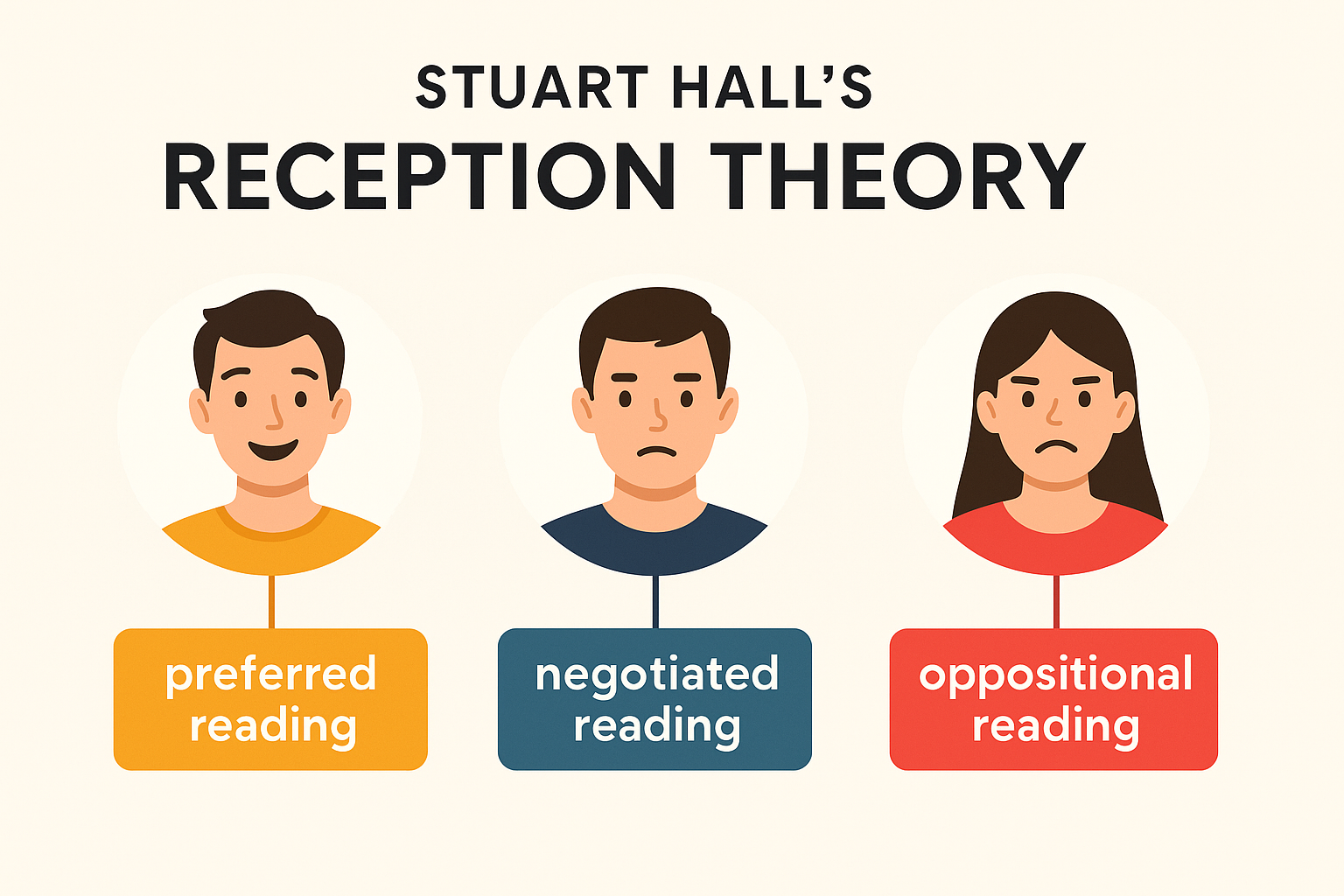
Hall’s Reception Theory Stuart Hall’s reception theory is all about how people understand media in their own unique way. He believed that the meaning of a film or show isn’t just decided by the creators—it also depends on how the audience interprets it, based on their own life experiences, beliefs, and background. Hall identified three main types of audience reactions: How We Used It When we showed our opening scene to a small group of viewers, their reactions were surprisingly varied. Everyone watched the same clip, but their interpretations didn’t always match ours: A few people had a preferred reading . They totally got the vibe we were going for—how peer pressure and fear of the unknown were central themes. They understood that the haunted room wasn’t just creepy but symbolized deeper emotional tension. Others gave us a negotiated reading . They liked the concept but didn’t take the ghost literally. Some thought it represented Jay’s own mental state, like anxiety or imaginatio...
In my whole life, I never thought I would be in a position to sit down and do an analysis of my favourite cartoon series. First of all, in order to begin to analyze, I took the simplest, but at the same time the most time-consuming type of media. I might be judged for choosing a kids’ show, but I am still a kid at heart, and I still watch cartoons that I like from time to time. It is almost like a way of keeping my inner child alive and the program I have chosen for my analysis is Paw Patrol. It may be twenty minutes long, or it may not look like much, but the analysis as we know it is a long process, especially for a movie! I don’t know if I can watch cartoons the same way I used to but in a way, this has also helped me learn a skill that I will definitely use in the future. ANALYSIS Camera Shots & Angles: Wide shots; Close-ups; Tracking shots; Over-the-shoulder shots; Low-angle shots; High-angle shots; Long shot; Medium shot; Medium close shot; Established shot; Aerial Shot;...

Comments
Post a Comment