Posts

Showing posts from May, 2025

Roland Barthes' Theory

Image
Reading Between the Frames: Roland Barthes’ Theory in The Whispering Nightmare Roland Barthes believed that media texts don’t have just one fixed meaning. Instead, each audience member interprets what they see in different ways, depending on their culture , experiences , and point of view . In other words, what one person sees as just an object or moment could feel completely different to someone else. Barthes introduced two key ideas: According to Barthes, signs like setting, sound, facial expression, or even lighting can suggest hidden emotions or themes. These interpretations shift from person to person, making every viewer’s experience a little different. How We Used Barthes’ Theory in The Whispering Nightmare We kept this theory in mind when creating our scenes. Here’s how some simple visuals and sounds in our film opening carried deeper meaning:
Stuart Hall’s Reception Theory

Image
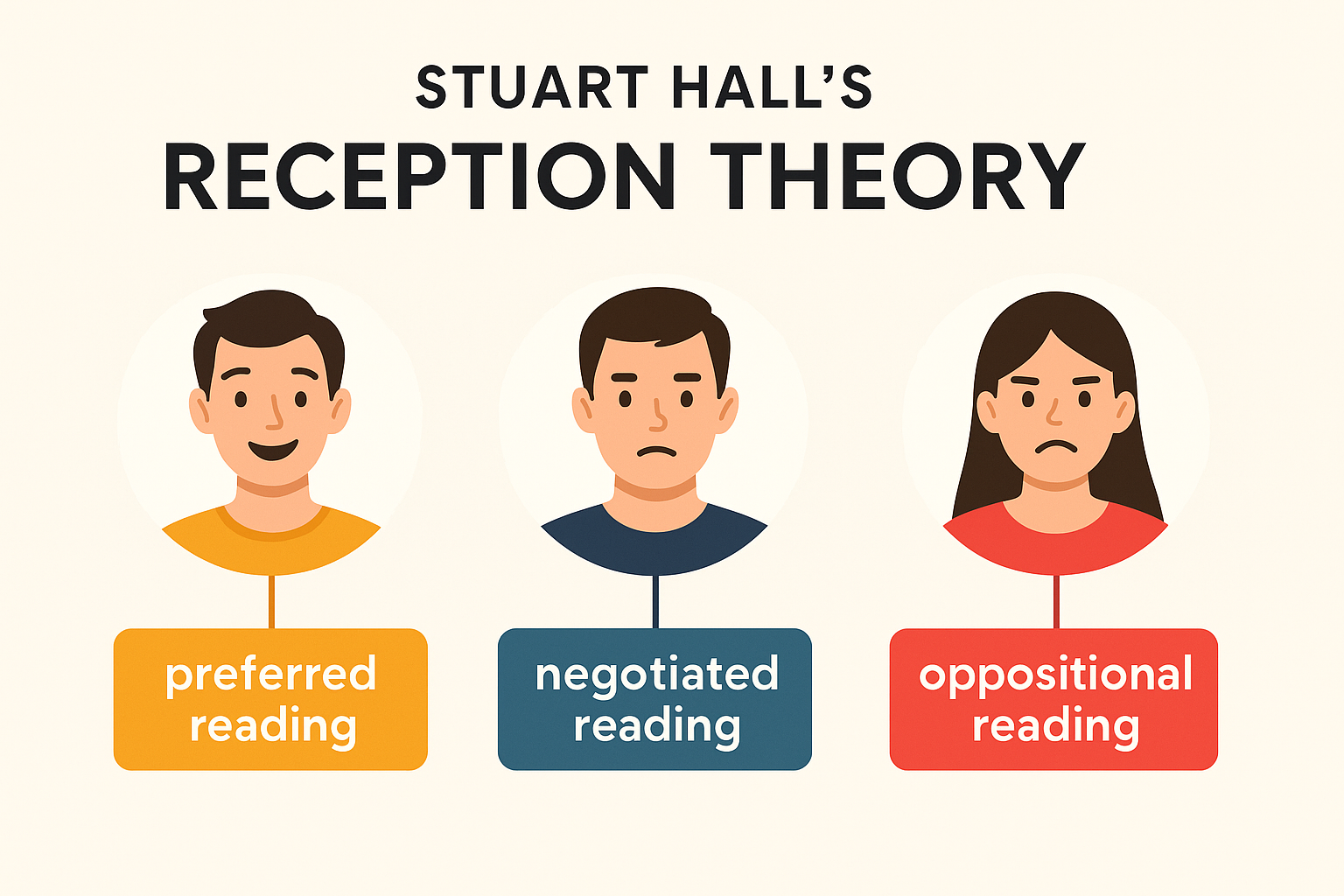
Hall’s Reception Theory Stuart Hall’s reception theory is all about how people understand media in their own unique way. He believed that the meaning of a film or show isn’t just decided by the creators—it also depends on how the audience interprets it, based on their own life experiences, beliefs, and background. Hall identified three main types of audience reactions: How We Used It  When we showed our opening scene to a small group of viewers, their reactions were surprisingly varied. Everyone watched the same clip, but their interpretations didn’t always match ours: A few people had a preferred reading . They totally got the vibe we were going for—how peer pressure and fear of the unknown were central themes. They understood that the haunted room wasn’t just creepy but symbolized deeper emotional tension. Others gave us a negotiated reading . They liked the concept but didn’t take the ghost literally. Some thought it represented Jay’s own mental state, like anxiety or imaginatio...

Steve Neale’s Genre Theory

Image
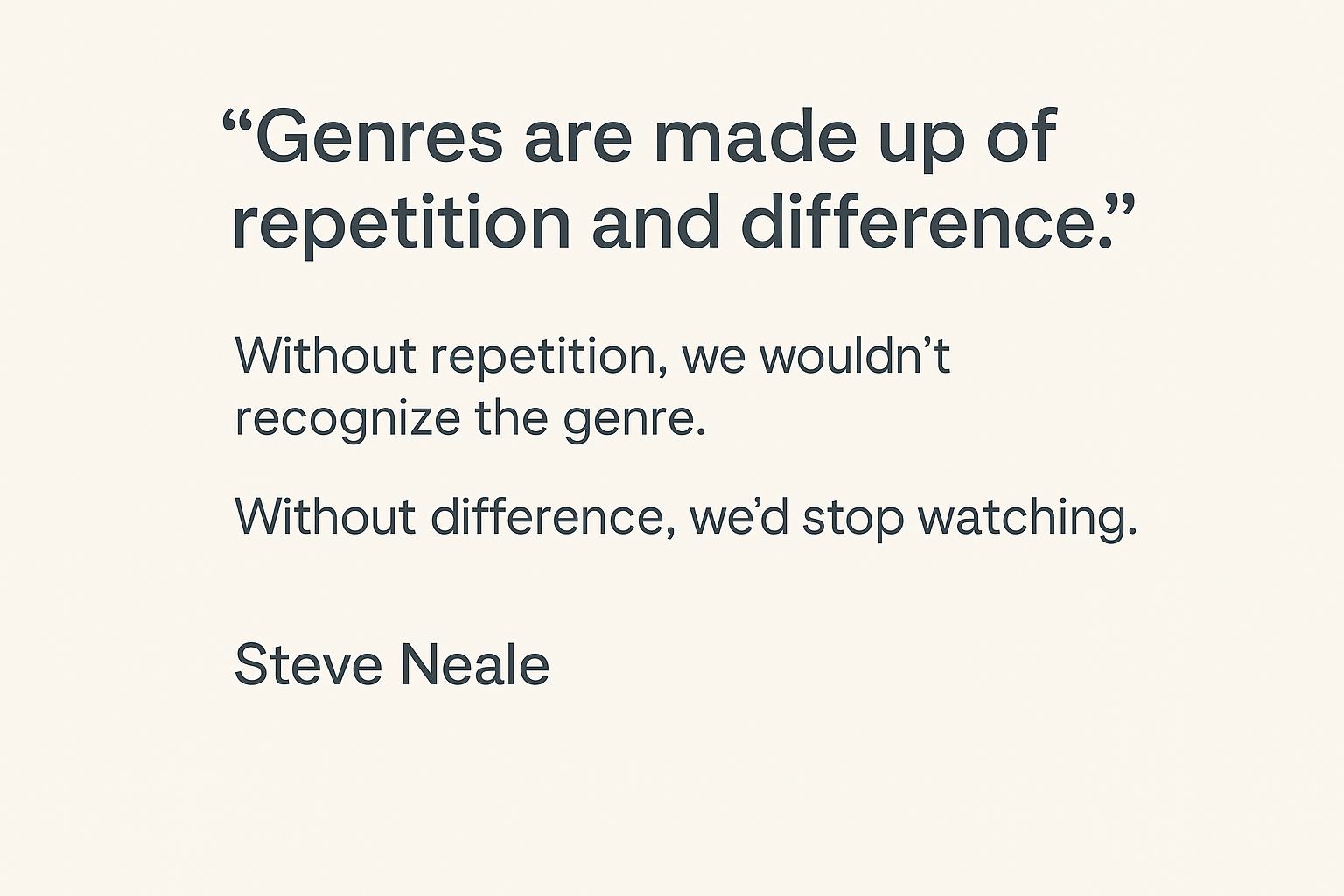
Genre with Steve Neale’s Theory— The Whispering Nightmare By combining comedy and horror themes, we wanted to establish a unique mood in the opening of our film, The Whispering Nightmare. Even though the story is only getting started, we wanted to let the viewers know right away what genre it is so they can be entertained We used Steve Neale's genre theory, which argues that while genres depend on recurring elements that viewers are accustomed to, they also need change to keep viewers interested. To put it another way, originality is essential to maintaining the experience's novelty value, even though certain conventions should be followed. Things We Recited (Well-Known Horror-Comedy Tropes) An eerie backstory and a ghostly location (Ethan Graves) Teens playing Truth or Dare together, which turns into a scary game Usually found in horror-comedy openings, humorous dialogue and light-hearted situations An eerie, silent conclusion that suddenly fades to black is a common horror cl...

Binary Opposition Theory

Image
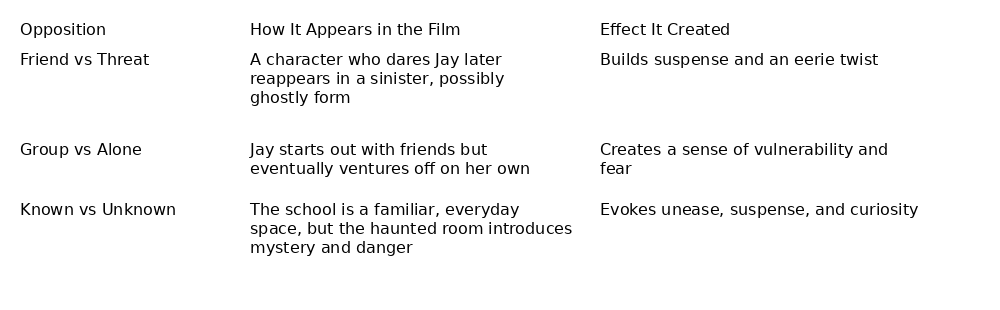
  Understanding Binary Opposition Theory Claude Lévi-Strauss came up with the idea that stories often revolve around clear-cut opposites—called binary oppositions . These contrasting elements help drive the plot and deepen emotional impact. In horror especially, these oppositions can amplify tension and engage the audience more powerfully. Some common binary opposites you’ll find in stories include: Light vs Dark Good vs Evil Safe vs Dangerous These contrasts don’t just show what’s happening—they make you feel it. The shift between opposites is what keeps the story gripping, particularly in horror films. How We Applied It in The Whispering Nightmare Right from the beginning stages of our planning, we used opposing ideas to build the structure of our story and create suspense. Here are a few key examples:

From Script to Screen: A Story Beyond the Frame

This is merely a synopsis of the entire procedure, excluding a few details. Let's move on to February and begin by selecting the genre we intend to work with, be it horror or just a short film that raises public awareness. Later on, we needed a subject to depict, or more accurately, a stereotype that we could utilize to create the movie, like peer pressure. Since some friends can be both positive and negative in specific ways, things can turn out badly, and nobody could have anticipated it. The script's construction process came next, where we talked about the specifics of the insert shots, the setting we would use, and the approximate number of actors we would need to find a space that would work for everyone. We attended the course for two Saturdays after the school individually organized a trip to a college that provided the direction and information we required. I genuinely liked it, and it was very helpful in removing some of my uncertainties and providing me with a better...